

Picture having to construct a model of a busy city without possessing the city’s blueprints; rather than relying on actual world data, you make a simulated one that resembles the city in terms of its features, arrangement, and behaviour. In this way, you are able to try out different kinds of infrastructure and transportation systems as well as test new ideas without taking on the risks associated with real-world trials. That is what synthetic graph data is all about—it’s a tool which enables us to generate knowledge graphs without needing real datasets.
The Power of Synthetic Graphs: A Constructed Reality
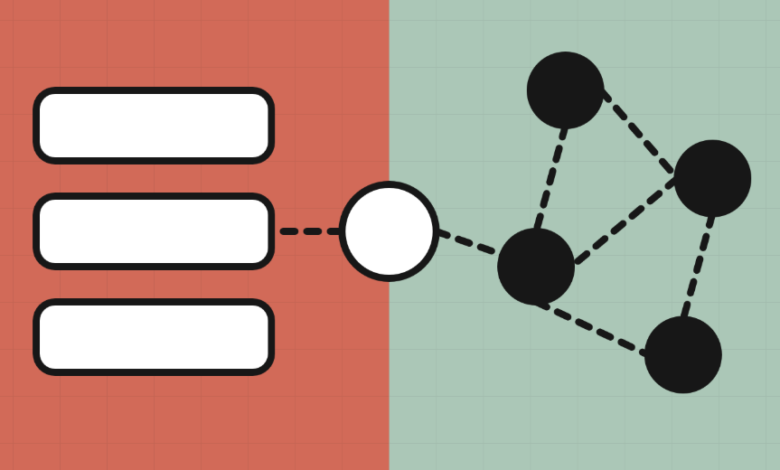
A synthetic graph is similar to a virtual landscape created from data, consisting of an artificial version of nodes (entities) and edges (relationships) that are present in the real world. It’s as though you had designed a digital city in which each building, street, and alley is purely imaginary yet acts in a manner similar to a real city. Such graphs do not use real data but are instead built using algorithms that simulate the relationships between different entities, thus producing realistic datasets for use in experimentation.
The value of synthetic graph data is that it enables the construction of knowledge graphs even when real-world data is scarce, unavailable, or has not yet been collected. For example, a healthcare data scientist may need a graph showing the connections between diseases, treatments, and patient outcomes. Yet, obtaining actual patient data is generally a time-consuming process and raises serious privacy concerns. Synthetic graph data provides a solution to this problem by producing plausible data that replicates the intricate network of relationships found in the medical field.
Data scientists are able to create synthetic graphs in order to construct knowledge graphs for the purpose of testing algorithms, training models, or merely to understand the relationships between different entities. This approach provides the advantage of being able to experiment and make iterative improvements without having to cope with the limitations of real-world data.
See also: Effective Spider Pest Control Techniques for a Pest-Free Home
Generating Synthetic Graphs: The Art of Simulation
There isn’t a simple way of constructing synthetic graph data; instead, a number of methods are employed to generate such graphs, such as:
- In the case of rule-based generation, specific rules are established regarding how the nodes and edges should be connected; it’s similar to planning out the layout of a city by selecting the streets, parks, and buildings in accordance with these predefined rules.
- When generating random graphs, connections between entities are made randomly, usually according to certain parameters such as the probability of a link existing between two nodes; this is similar to placing streets randomly on a city map and then modifying them in accordance with a few simple constraints.
- Generative Models: Thanks to progress in AI, generative models such as GANs (Generative Adversarial Networks) are now capable of producing more realistic synthetic graphs. They work by learning the underlying distribution of real-world graphs and then create new graphs that resemble the patterns found in actual networks. It’s similar to teaching an artist to copy the architectural style of a city—after some time, the artist will be able to come up with new designs that seem genuine.
It is important for data scientists to learn how to apply these techniques effectively, and taking a Data Science Course can be of advantage in this regard. Such courses instruct learners in the basic skills needed in order to understand graph theory, network analysis, and the algorithms involved in the generation of synthetic data.
Advantages of Synthetic Graph Data
1. Cost-Effective Development
By generating synthetic graph data, there is no longer the need for costly and time-consuming data collection. Rather than investing resources in obtaining real-world data, synthetic data enables quick prototyping and testing without having to face the initial expenses. This allows data scientists to examine a wider range of scenarios and create more reliable systems all without the financial strain.
2. Flexibility and Control
Data scientists can control all aspects of synthetic graph data. If they need graphs that are sparse and have only a few connections or graphs that are dense with complex relationships, they can adjust the data generation process. It’s similar to having full control over the planning of a city, enabling experimentation with various layouts, infrastructure, and services without having to worry about logistical constraints.
3. Bias Mitigation
Real-world datasets usually have built-in biases, for example by underrepresenting some groups while overrepresenting others. Synthetic graph data can be carefully designed in such a way as to avoid these biases and thus provide more diverse and balanced data for training models. For example, in the field of healthcare, synthetic data can be designed to make sure there is an equitable representation of all the different demographics, resulting in fairer and more accurate AI models.
4. Safe Testing Environment
Testing AI models using real-world data at times results in unintended consequences or costly errors. Synthetic graphs enable safe testing in isolated environments, allowing researchers to try out various algorithms and make adjustments to the systems without the risk of disrupting actual operations. This is similar to carrying out simulations in a controlled laboratory setting before conducting the experiments in the field.
Key Applications of Synthetic Graph Data
The applications of synthetic graph data are vast and span various industries:
- Synthetic graphs can be used to model the social connections which exist between people or organisations, enabling analysts to examine patterns such as influence, the flow of information, and community structures.
- E-commerce websites make use of synthetic graphs in order to model product recommendations on the basis of user preferences, interactions, and purchase history, thereby helping to improve the algorithms which suggest items to customers.
- In the field of healthcare, synthetic graphs can be used to simulate the relationships between diseases, treatments, and patient outcomes, enabling research to be carried out without requiring sensitive patient data.
- Experts in cybersecurity make use of synthetic network graphs in order to simulate possible attack scenarios, so that they can test their security protocols before putting them into use on actual systems.
For people who want to explore synthetic data generation further, data scientist courses provide practical and hands-on training which gives students the skills needed to use synthetic data in real-world applications.
Conclusion: The Future of Knowledge Graphs
With the increasing demand for AI-powered systems, the importance of having reliable, accessible and diverse datasets has become even more significant. Synthetic graph data offers a powerful answer to this need, enabling data scientists to produce realistic knowledge graphs without having to be constrained by the process of collecting real-world data. Synthetic graphs can be adapted to meet the particular requirements of different industries, such as healthcare and cybersecurity, by using methods including rule-based generation, random graph creation and generative AI models.
For those eager to master these techniques, pursuing a Data Science Course or data scientist classes can be the key to unlocking the potential of synthetic data. These courses not only provide foundational knowledge in data analysis and AI but also teach the practical skills needed to create synthetic datasets that drive innovation.
Business Name: ExcelR – Data Science, Data Analytics Course Training in Bangalore
Address: 49, 1st Cross, 27th Main, BTM Layout stage 1, Behind Tata Motors, Bengaluru, Karnataka 560068
Phone Number: 09632156744