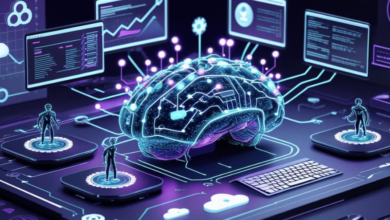

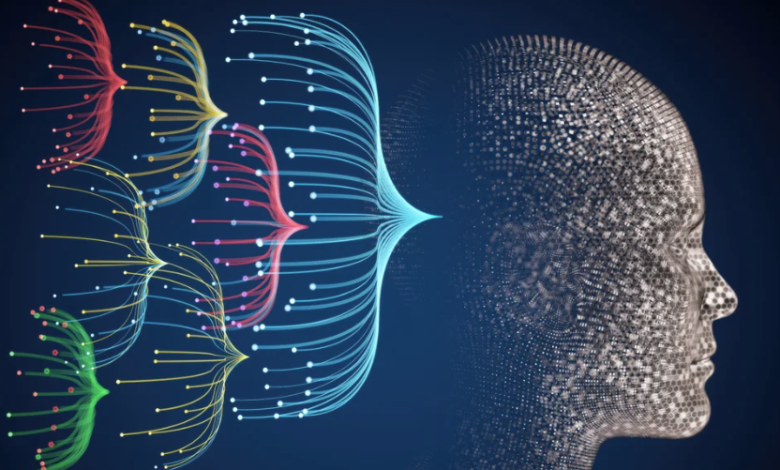
Envision an elderly clockmaker sitting next to a jazz musician. The clockmaker constructs gears that have to click together with mathematical precision—each tooth and each rotation must conform to rules that never change. The musician, on the other hand, works out the melody by sensing patterns, improvising, and taking into account the atmosphere of the room before playing her next note. Neuro-symbolic data modeling is what occurs when these two finally sit down at the same table and build something together: a system that reasons like the clockmaker and perceives like the musician. One part demands rules, structure, and logical constraints, while the other flourishes in ambiguity, texture, and in the raw pattern recognition drawn from vast amounts of data. Neither method on its own is able to provide the complete picture, but when combined they result in machines that don’t merely predict—they actually understand why.
This combined method is gradually altering the way organisations model data, and its impact is growing so quickly that even someone who is new and just starting to look at Data Science Classes in Bangalore will probably come across it in the early sections dealing with advanced AI architectures.
The Gearbox and the Gut Feeling
Neural networks are excellent at relying on instinct. If you provide them with millions of images, transactions, or sentences, they will detect patterns that no human could ever spot. However, such instincts can go wrong; a neural network might confidently mislabel a scan of a rare disease just because it hasn’t seen enough examples of it. In contrast, symbolic logic is a completely different kind of system—it doesn’t make guesses, it reasons. For example, if given a rule such as “if the fever continues beyond ten days, refer the case to a specialist”, it will never forget it and won’t bend the rule under pressure. Neuro-symbolic modelling combines the precision of the gearbox with the adaptability of instinct, allowing the neural part to bring forward possible solutions while the symbolic part examines them using logical structure.
See also: Why Light Guide Plate Technology Matters in Modern Display and Lighting Applications
Teaching Machines to Ask “Why”
Traditional machine learning models are well known for saying nothing about how they arrive at their conclusions. They do produce an output, but the reason for that output remains hidden within a black box consisting of weights and activations. By incorporating symbolic reasoning, transparency is introduced into that darkness. It’s similar to a lawyer cross-examining a witness who has a feeling — the lawyer makes the witness support each of his claims with evidence and precedent. In neuro-symbolic systems, each prediction made by the neural network can be traced back via a chain of logical rules, thereby turning vague guesses into conclusions that can be explained. This is of great importance in areas such as finance and healthcare, where a decision that is not explained can have legal or ethical repercussions.
Where Rigid Rules Meet Messy Reality
For a long time financial institutions have used rule-based systems to identify suspicious transactions, but fraudsters change more quickly than the static rules are able to keep up with. Banks can now detect new types of fraud by combining pattern-recognition networks with rule-based reasoning systems, while at the same time maintaining the compliance logic which regulators require. In the case of supply chain management as well, companies have linked predictive neural models which forecast demand spikes with symbolic constraint solvers that take into account contractual and logistical rules — thus making sure that the predictions do not breach real-world restrictions such as warehouse capacity or delivery deadlines. In the field of autonomous robotics, engineers have matched perception networks that can recognise objects in a room with symbolic planners that know the spatial rules, enabling the robots to move around safely without having to recalculate the physics from scratch each time. All of these examples show one thing: intuition without structure leads to chaos, and structure without intuition is fragile.
The Architecture of Trust
Creating neuro-symbolic systems involves more than just combining two technologies; it requires an architectural philosophy. When data scientists are making their decisions they have to determine which ones should be handled by the neural component and which by the symbolic one, in a way similar to an editor deciding which paragraphs should have the touch of a novelist and which should be subjected to a fact-checker’s attention. This kind of balance is now becoming a fundamental ability taught in higher-level analytics courses, which is one of the reasons why interest in Data Science Classes in Bangalore has increased among professionals who want to specialise in explainable AI rather than in purely predictive modelling.
The Feedback Loop Between Logic and Learning
One of the most interesting features of this combined method is the feedback it creates. The symbolic rules are able to correct mistakes made by the neural network, but insights from the neural network can also be used to improve obsolete rules. It’s a dynamic relationship — the clockmaker picks up new rhythms from the musician and in turn the musician gains discipline from the clockmaker. As time goes on, the system doesn’t merely perform better; it develops its own understanding of the world.
Conclusion
The idea of neuro-symbolic data modeling is not a temporary fad但它 represents a fundamental change in the way machines think. Through combining the natural flexibility of neural networks with the rigorous certainty of symbolic logic, companies are developing systems that are not only powerful but also accountable. Since the various industries are still looking for AI that is able to explain its actions, this blend of instinct and reasoning could very well end up being the new benchmark for reliable intelligence.
For more details visit us:
Name: ExcelR – Data Science, Generative AI, Artificial Intelligence Course in Bangalore
Address: Unit No. T-2 4th Floor, Raja Ikon Sy, No.89/1 Munnekolala, Village, Marathahalli – Sarjapur Outer Ring Rd, above Yes Bank, Marathahalli, Bengaluru, Karnataka 560037
Phone: 087929 28623
Email: enquiry@excelr.com