
Long-Term Memory Management for AI Agents: Building Persistent Preference and Interaction Stores

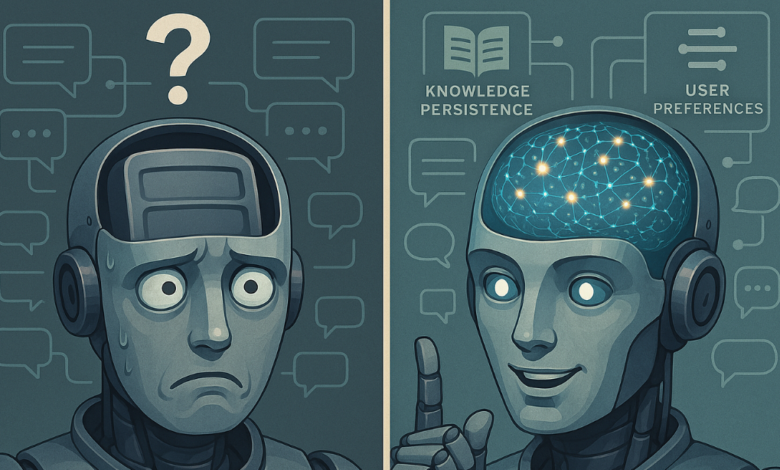
Modern AI agents are expected to behave consistently across days or weeks, not just within a single chat. If a user says they prefer concise answers, a specific tone, or a particular workflow, the agent should not “forget” that preference the next time they return. This is where long-term memory management matters. It focuses on implementing persistent memory stores so agents can remember user preferences and historical interactions across sessions, while still staying accurate, safe, and privacy-aware. For teams learning these patterns through an agentic AI course, long-term memory becomes a core engineering capability rather than an optional add-on.
What “Long-Term Memory” Actually Means in Agent Systems
Long-term memory is not the same as saving an entire conversation history forever. Instead, it is a curated store of useful, durable signals that improve future interactions. A good memory system answers questions like:
- What does the user consistently prefer (tone, format, level of detail)?
- What stable facts are relevant (time zone, role, product setup, recurring goals)?
- What ongoing tasks or projects are active (documents, initiatives, recurring problems)?
- What past outcomes should influence future choices (successes, failures, constraints)?
The key is selectivity. Storing everything leads to noise, higher risk, and worse retrieval. Storing nothing forces the agent to re-discover context repeatedly. Strong long-term memory finds the middle ground: keep what is stable, useful, and user-aligned.
See also: Effective Spider Pest Control Techniques for a Pest-Free Home
Designing the Memory Store: Data Model and Storage Patterns
Separate memory types by purpose
A practical design uses multiple “buckets” rather than one messy database:
- Profile memory: stable preferences (language, tone, formatting rules).
- Project memory: ongoing work items (goals, artifacts, decisions).
- Interaction summaries: short distilled records of key outcomes.
- Operational memory: tools, integrations, and environment details.
This separation makes retrieval easier and reduces accidental leakage of irrelevant data into responses.
Use structured records, not free-text blobs
Agents perform better when memory is stored as small, structured entries. For example:
- Preference: “User prefers bullet points, minimal fluff, British English.”
- Constraint: “Avoid external links in content drafts.”
- Workflow: “Use step-by-step debugging before proposing a solution.”
Each record should include metadata such as timestamp, confidence, source (explicit user statement vs inferred), and expiry rules.
Combine semantic and exact retrieval
Many teams pair:
- A vector store (for semantic similarity search using embeddings), and
- A key-value or relational store (for exact fields like time zone, name, plan type, or chosen tools).
This hybrid approach is commonly taught in an agentic AI course because it handles both fuzzy recall (“what did the user like?”) and precise lookup (“which city did they mention?”).
Retrieval and Update Logic: Making Memory Useful Without Overfitting
Retrieve only what you need, when you need it
A frequent failure mode is over-retrieval: the agent pulls too many memories and becomes biased or repetitive. A better approach is “targeted retrieval”:
- If the user asks for a blog draft, retrieve writing preferences and the last known style rules.
- If the user asks about a project, retrieve project memory only.
- If the user asks a factual question, retrieve minimal profile context.
This keeps responses focused and reduces the risk of irrelevant personal details surfacing.
Summarise and consolidate over time
Long-term memory should evolve. If the user repeats the same preference, the system should consolidate multiple entries into one stronger record. If a preference changes, the system should supersede older records rather than mixing them.
A simple policy works well:
- Promote repeated signals into stable memory.
- Expire one-off or time-sensitive notes.
- Merge duplicates into a single canonical entry.
Track confidence and allow correction
Memory should not be treated as absolute truth. Store confidence, and design for easy correction:
- “If I’m wrong, tell me and I’ll update that preference.”
This makes the agent feel reliable rather than stubborn.
Privacy, Safety, and Evaluation: Building Trustworthy Memory
Ask for permission where it matters
Some data should never be stored silently. A good memory system distinguishes between:
- Low-risk preferences (format, tone, content style), and
- Sensitive or identity-related information (health, politics, precise location).
When in doubt, the agent should store less, or ask clearly.
Implement access control and redaction
If memories are used across tools or teams, apply strict access control. Store only what is needed, encrypt at rest, and redact sensitive elements from logs. Also, design “forget” operations so users can remove stored memory cleanly.
Evaluate with measurable signals
Memory systems should be tested like any other component:
- Did personalisation improve task success rate?
- Did the agent reduce repeated questions?
- Did hallucinations or privacy incidents increase?
- Are retrieved memories relevant to the user’s current intent?
These evaluation habits are critical in production-grade agent builds and are increasingly emphasised in an agentic AI course focused on real deployments.
Conclusion
Long-term memory management is the difference between a helpful agent and a forgetful chatbot. The best systems store curated, structured, and permission-aware memories, retrieve only what is relevant, and continuously consolidate or expire entries over time. When implemented well, persistent memory reduces friction, improves consistency, and builds user trust. For practitioners applying these ideas from an agentic AI course, the goal is clear: make memory a controlled capability that improves outcomes, not a noisy archive that increases risk.
For more details visit us:
Name: ExcelR – Data Science, Generative AI, Artificial Intelligence Course in Bangalore
Address: Unit No. T-2 4th Floor, Raja Ikon Sy, No.89/1 Munnekolala, Village, Marathahalli – Sarjapur Outer Ring Rd, above Yes Bank, Marathahalli, Bengaluru, Karnataka 560037
Phone: 087929 28623
Email: enquiry@excelr.com