Edge Analytics: Learning to Deploy Models on IoT Devices for Instant, On-Site Decision Making

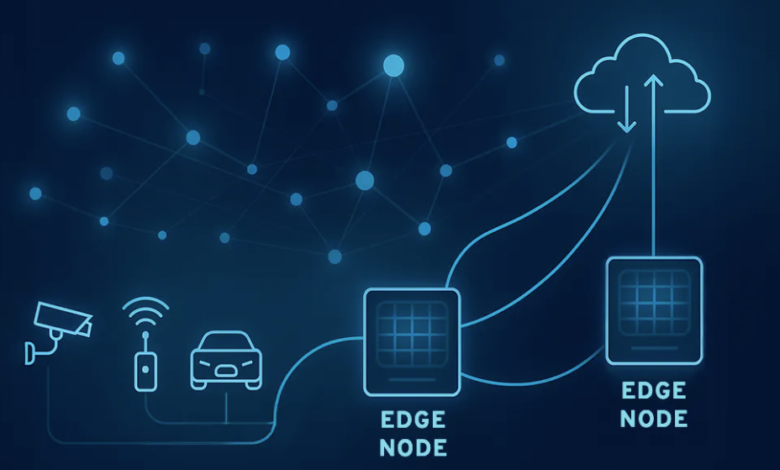
The way in which businesses gather and use data has been transformed by the Internet of Things. Every second, sensors, cameras, and connected machines produce huge amounts of information. It takes a long time to send all this data to a distant cloud server to have it processed, and in many cases, this kind of delay is not acceptable. That is why edge analytics has been developed. Instead of running machine learning models on the IoT devices themselves, organizations are able to make decisions immediately, without having to wait for a message to go to a remote server. The following article examines what edge analytics is, why it is important, and how professionals can acquire the skills needed to deploy models at the edge.
What Is Edge Analytics?
Edge analytics is the method of carrying out data processing near the point where it is generated, rather than sending the data first to a central data center. Rather than a sensor forwarding its raw readings to the cloud and then waiting for a reply, the analysis is performed on the device itself or on a nearby gateway. This method lowers latency, conserves bandwidth, and enables the systems to react in real time.
For instance, a smart camera installed on a factory floor is able to spot a defective product as it moves along the conveyor belt without having to refer to an external server. A wearable health monitor can identify an irregular heartbeat and at once notify the user. These results are due to the use of models that are small, efficient, and capable of operating on hardware that has limited memory and processing power.
See also: Why Light Guide Plate Technology Matters in Modern Display and Lighting Applications
Why On-Site Decision Making Matters
Speed is the most obvious advantage of edge analytics, but there are others as well. Take the following benefits, for example:
- There is less latency since decisions are now made in milliseconds rather than seconds, something that is important for uses such as autonomous vehicles or industrial safety systems.
- Lower bandwidth costs can be achieved by transmitting only summarised or actionable data rather than a continuous stream of raw sensor readings.
- Privacy is improved since sensitive data, for example, video recordings or health measurements, can be processed right on the device rather than being sent away, which helps adherence to data protection regulations.
- There is greater reliability since the devices are able to keep working even if the internet connection is poor or not available, something that is important in remote areas such as farms, mines, or offshore platforms.
For these reasons, companies across sectors such as manufacturing, agriculture, and healthcare are investing in edge-based solutions.
Building the Skills to Deploy Models at the Edge
Putting a model on an IoT device is different from building one for a cloud environment. To do this, developers must understand model compression techniques such as quantization and pruning, which reduce model size without significantly affecting accuracy. They also need to be familiar with lightweight frameworks such as TensorFlow Lite, ONNX Runtime, or Edge Impulse, which are designed to run efficiently on resource-constrained hardware.
People who wish to establish a career in this field will find structured learning to be advantageous. A thoughtfully designed data analytics course can provide the statistical fundamentals, programming abilities, and model evaluation techniques that are essential to any analytics project, whether it is edge-based or not. After that, learners can focus on aspects related to embedded systems, hardware limitations, and the deployment processes particular to IoT devices.
Just as much importance should be given to practical experience as to theory, when people work with actual devices, for example, Raspberry Pi boards, microcontrollers, or industrial sensors, they are able to grasp the trade-offs among accuracy, speed, and power consumption. The ability to test models under real-life conditions, such as with limited memory and intermittent connectivity, is a skill that cannot be completely acquired through classroom teaching alone.
Common Challenges in Edge Deployment
There are several challenges involved in deploying models at the edge. Since hardware is limited, a model trained on a powerful server will generally need to be significantly modified to run on a small device. Another issue is power consumption, especially for battery-operated sensors, which must operate for months without recharging.
There are also logistical difficulties involved in maintaining and updating models after they have been deployed on hundreds or thousands of devices. Organizations must have definite strategies in place for monitoring model performance, for detecting drift, and for pushing out updates without disrupting their operations. Security is just as important, since edge devices are generally more susceptible to physical tampering than centralized servers.
People who are considering taking a data analytics course with a view to applying it to IoT should look for courses that address these practical issues, not merely those that focus on building theoretical models.
Conclusion
Organizations are changing the way they use data because decision-making is now being carried out closer to the place where events take place. This approach leads to quicker responses, lower costs, and systems that can still function even when not constantly connected. With increasing numbers of industries introducing connected devices, the need for individuals who have knowledge of both data science and embedded deployment will keep on rising. This kind of expertise can only be acquired through structured learning along with practical experience, enabling professionals to create models that work reliably in the real world rather than just in a laboratory.
For more details, visit us:
Business Name: Data Analytics Academy
Address: Landmark Tiwari Chai, Unit no. 902, 09th Floor, Ashok Premises, Old Nagardas Rd, Nicolas Wadi Rd, Mogra Village, Gundavali Gaothan, Andheri E, Mumbai, Maharashtra 400069
Phone Number:09513173654
Email ID: elevatedsda@gmail.com